
OwlyFans
OwlyFans Podcast
Robbert Uyleman, Farmer:
0:00
-32:22

Robbert Uyleman, Farmer:

“I don’t brew beer anymore, but the same passion for making things is still there.”
NOTE: THIS PODCAST IS IN DUTCH. LUCKY ALL YOU DUTCHIES. THE PODCAST TRANSCRIPTS HAVE BEEN TRANSLATED TO ENGLISH BELOW. IF YOU PREFER TO READH DUTCH INSTEAD OF LISTEN TO IT, THE DUTCH TRANSCRIPTS ARE AVAILABLE AFTER THE ENGLISH BELOW.
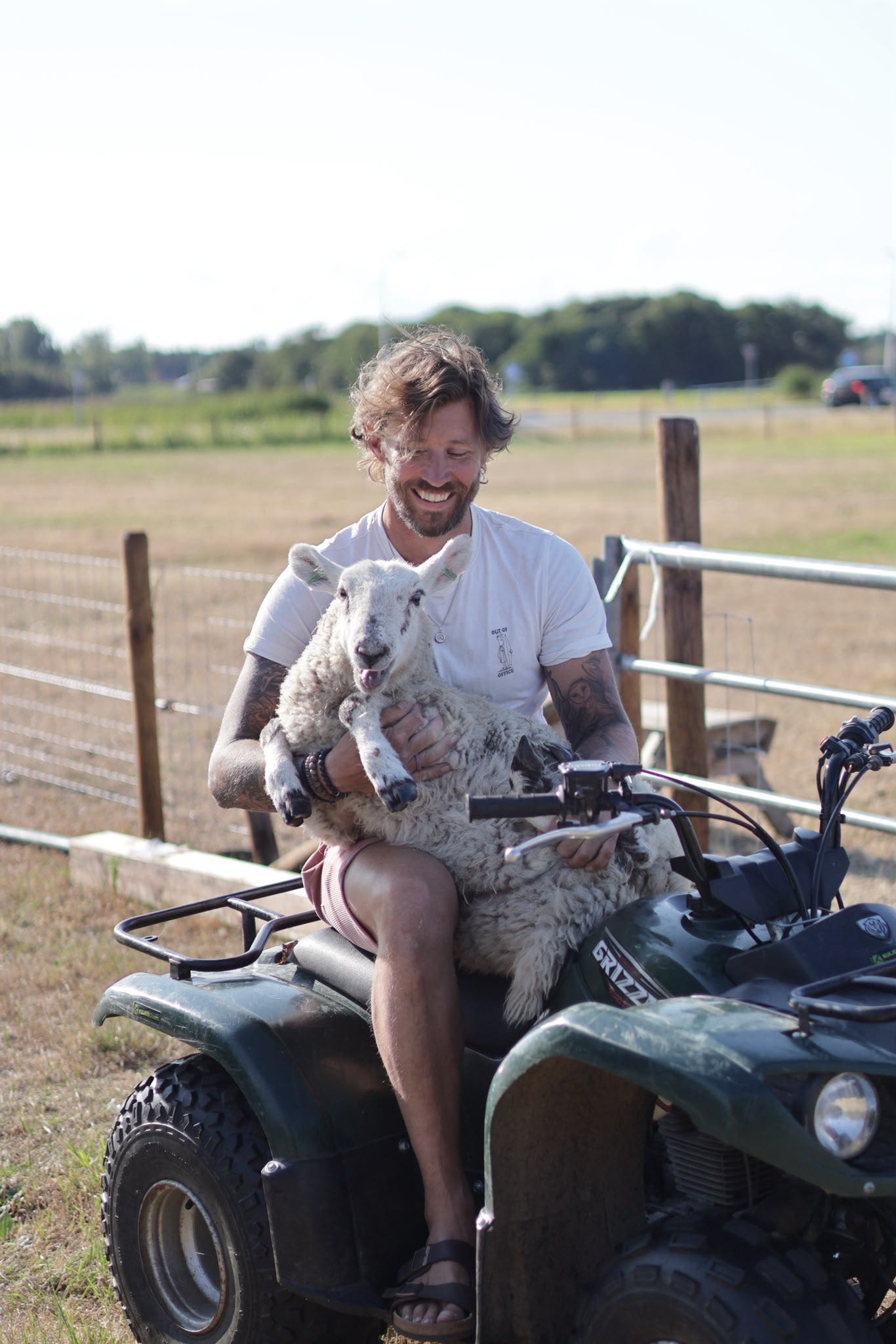
ABOVE PHOTO @ROOS UYLEMAN. ALL OTHER PHOTOS @JOHN WEICH

This past weekend, Uiltje mainstay John Weich headed north to the Dutch island of Texel to meet up with Uiltje founder Robbert Uyleman on his…farm. Robbert, who founded Uiltje in 2012 and left the company a decade later, moved to Texel in 2024. Over the past two years he’s been transforming a former dairy farm into his own little agro-maker paradise almost entirely with his own two hands. John and Robbert know each other well, but it was John’s first visit to the Uyleman Farm. After an evening of British bitters and reminiscing (Café du Théâtre owner and good friend Tjerk Schreurs was there too), John pulled out his recorder (which he always carries) and taped a half-hour of their conversation. Enjoy.

John: That voice sounds familiar. Good afternoon!

Robbert: Good afternoon. This is Robbert Uyleman.

John: Old McRobbert Uyleman, you mean.

Robbert: Old McRobbert has a farm. Yeah, that’s a bit of a change of scenery, let’s say.

John: We’re at Robbert’s place, on his farm on Texel. I’m not giving out the address just yet, or everyone will come flocking here. You’ve been doing your own thing the past few years. We’ve obviously stayed in touch, so I’m in the loop, but I think it’d be fun for the Uiltje folks and the Uiltje Universe, who’ve followed you all these years, to hear what you’re up to now. So let’s start there: what are you doing these days?

Robbert: We’d actually wanted to do something different for years. Just get out of the crowded Randstad — that was one of the dreams we’d had for a long time. We spent a long time looking at a farm in England, but that turned out to be a really big step. I also have two young kids. Something with sheep, with farming, has always intrigued us, and England had appealed to me for a long time. So we basically just went through the Netherlands thinking: where do we actually want to go, what’s a nice spot? And we couldn’t land on anything. Until one day I was on Texel with my daughter. I thought right away: wow, this is actually pretty cool. I texted my wife Roos: “How would you feel about moving to Texel?” And I got back right away: “Okay, good.” That was in July, and by October we’d already bought this place.
John: Let’s go back to basics: you wanted out of Haarlem and were looking for a new adventure.

Robbert: Yeah, that had actually been in the back of my mind for much longer, even back when we were still running Uiltje. Around 2016, 2017 — before COVID — we were super busy with all kinds of new things: we wanted a Uiltje bar at Schiphol, and we were also looking into whether we could open a Uiltje brewpub in Manchester or somewhere like that. At some point that turned into a serious conversation, and I thought: if we’re going to do this, I want to focus on it, because that’d let me fulfill my dream of finally going to England. But in the end it didn’t happen. So that idea — getting out of Haarlem, going to England — was always there. It ended up being Texel instead. Also an island, also lots of sheep, and it has a real island culture of its own. That’s maybe also why I felt at home here right away.

John: Describe exactly where we’re sitting right now, because it’s my first time here. I know all the plans, we’ve texted back and forth along the way and you sent photos, but right now we’re literally sitting in an English pub on your farm.

Robbert: Yeah, exactly.

John: You brought England here, not the other way around.

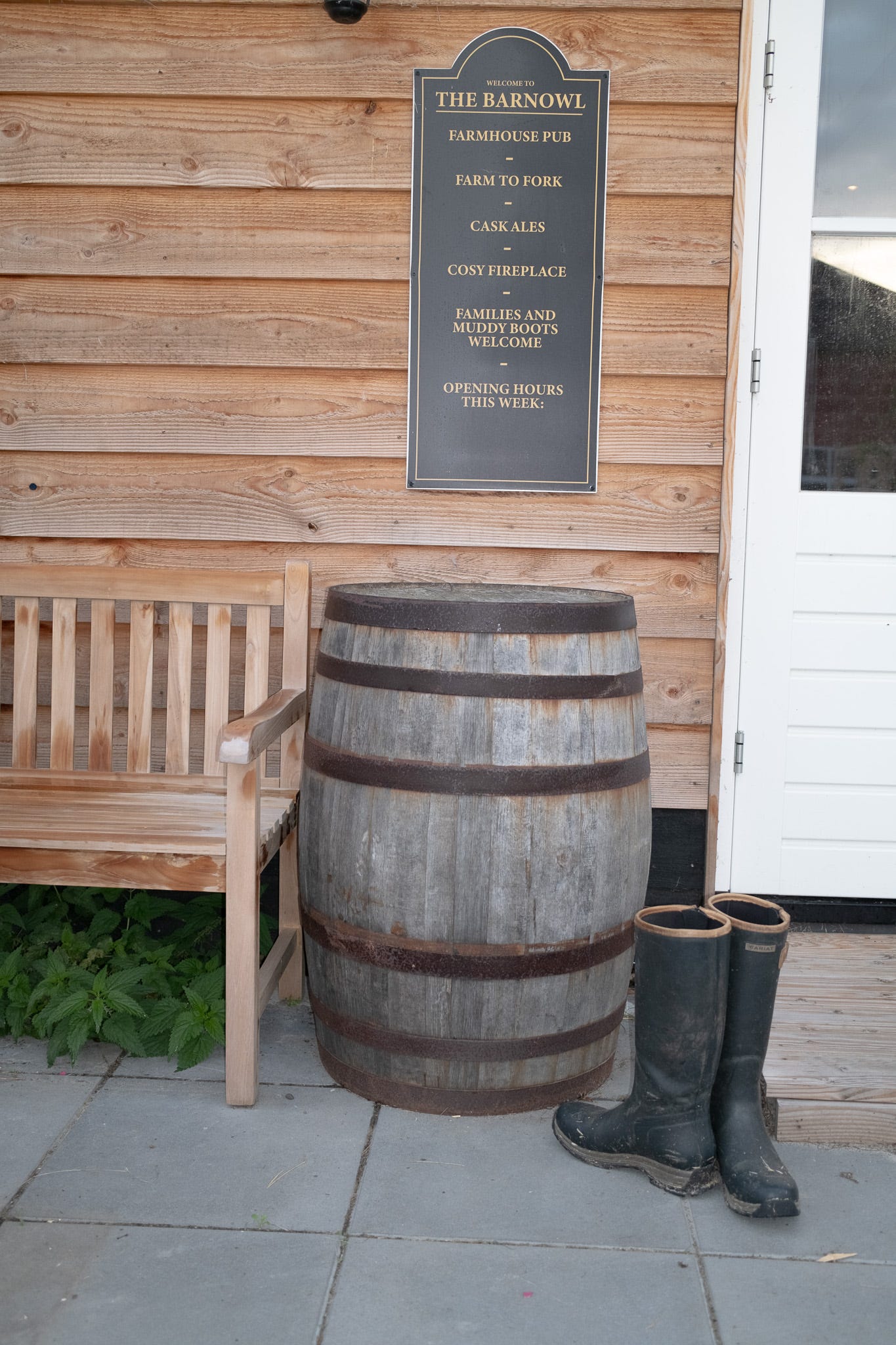
Robbert: We needed a place on the farm, partly because we have friends visiting, but also because we’ve got a few ideas around tackling loneliness among older people. We want to offer a place for that — somewhere people can sit comfortably and have some social contact. Roos always calls it “Leonie’s place” — we wanted something for that. On top of that, we also just need a canteen on the farm, for the women who take care of the horses here, and for ourselves, to have lunch and sit for a bit now and then. So I thought: what if I just build something myself? I had an old barn, and I converted part of it into a bar. Families and Muddy Boots Welcome, let’s say. Low ceiling, wooden beams, a big open fireplace — exactly like all the pubs I visited over the years with Uiltje. I always used to say: let’s focus on England for this stuff, because we always had so many great spots there, and it was easy for me to go back and forth. So I brought that here: I built my own farmhouse pub, complete with two taps and two original English Angram handpulls. Brewing beer is still in there somewhere, after all — not the heavy double IPAs and Imperial stouts anymore, but honestly, secretly, always my own favorite beer style: British ales. Bitters, porters, pale ales, all around 4% alcohol.

John: We drank a fair few Uiltje beers out of the fridge yesterday.

Robbert: I was at the brewery just a few days ago and grabbed some. I still stop by there now and then, and every so often the guys come out here too. Then I get sent home with a box of beer, which just goes straight in the fridge. Always nice to have.

John: It’s a really lovely spot, let’s start there. But let’s look outside for a second: this isn’t just some hobby farm, this is a real working farm. Describe the surroundings — you’ve been working here for two years now.

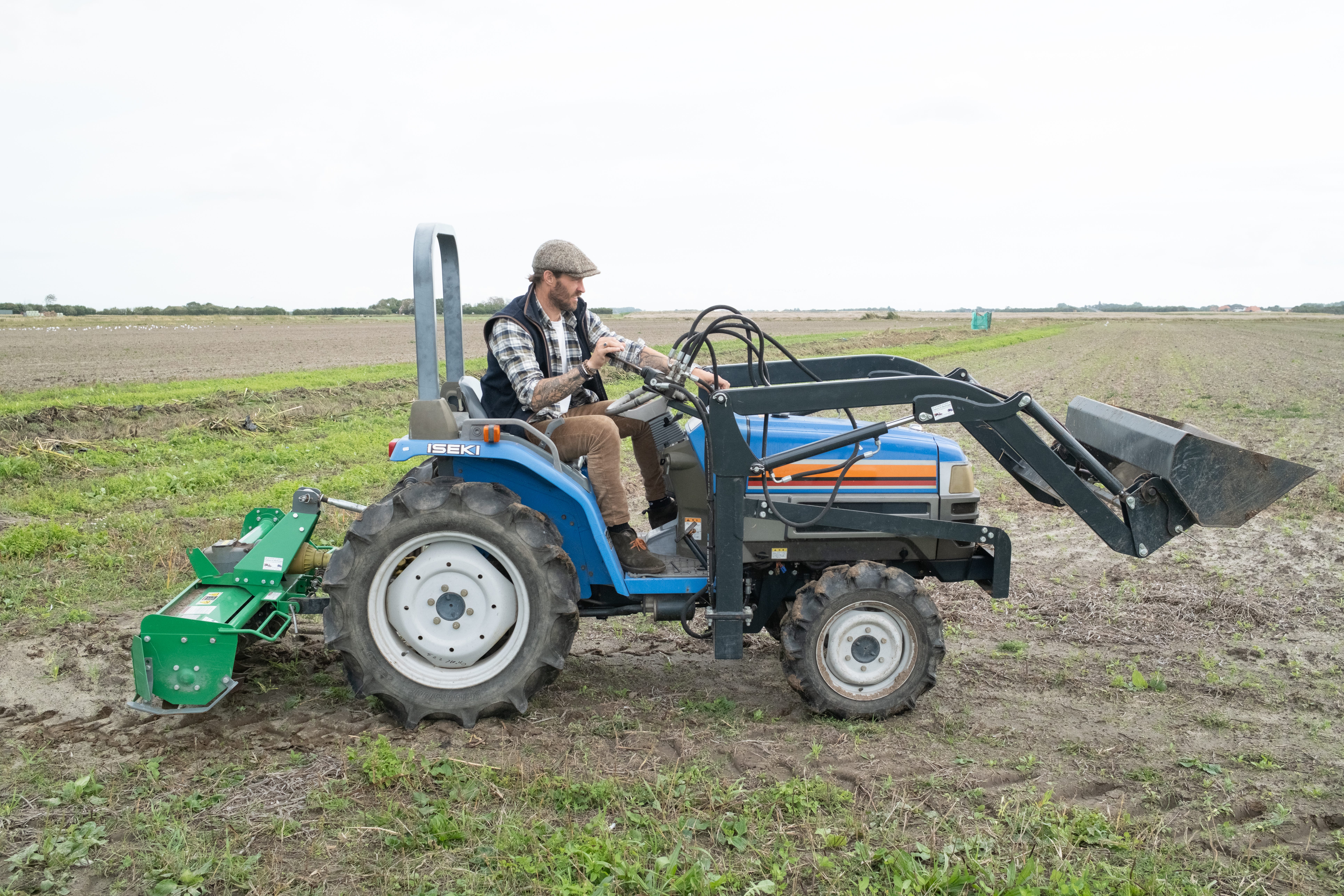
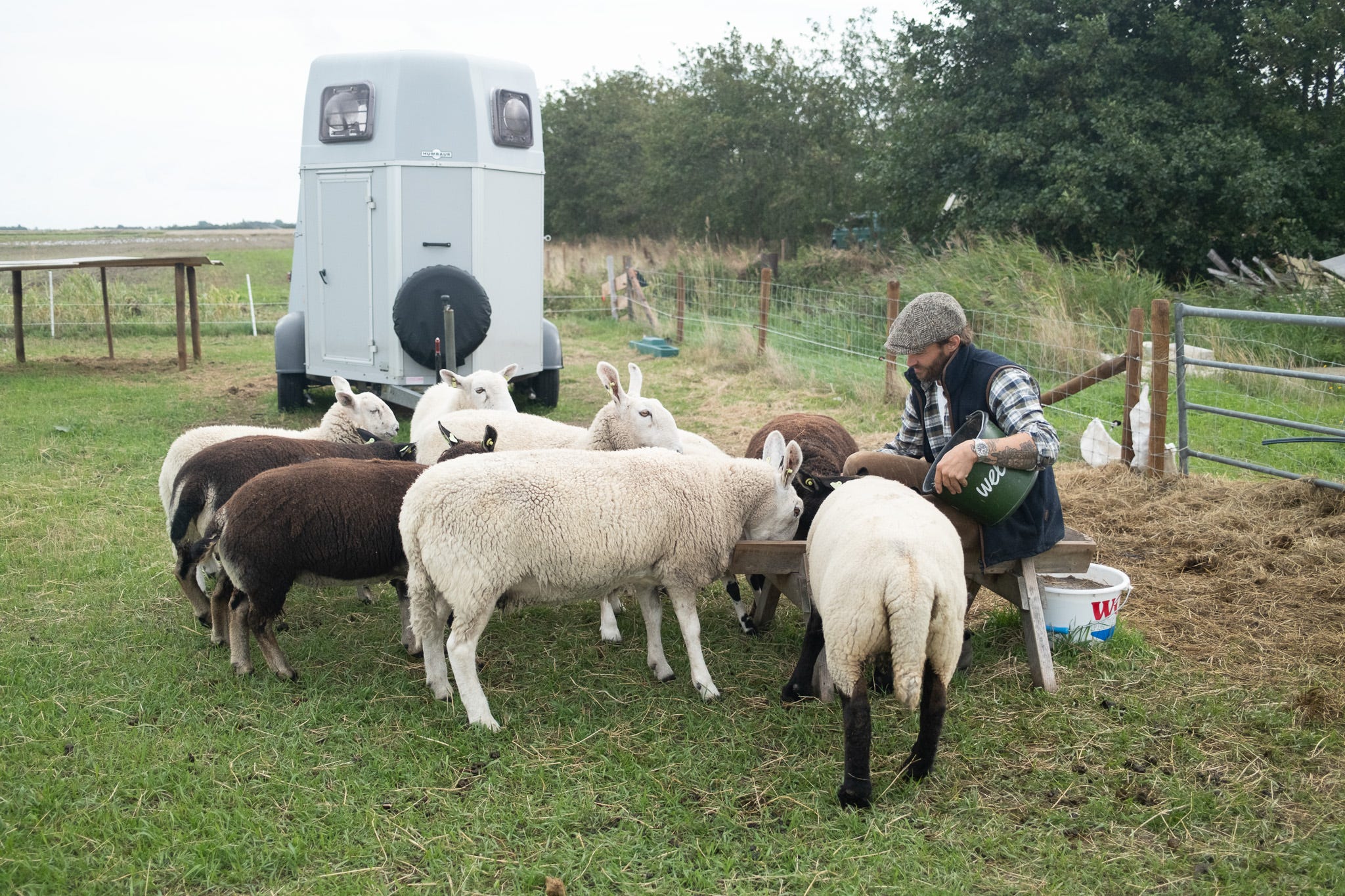
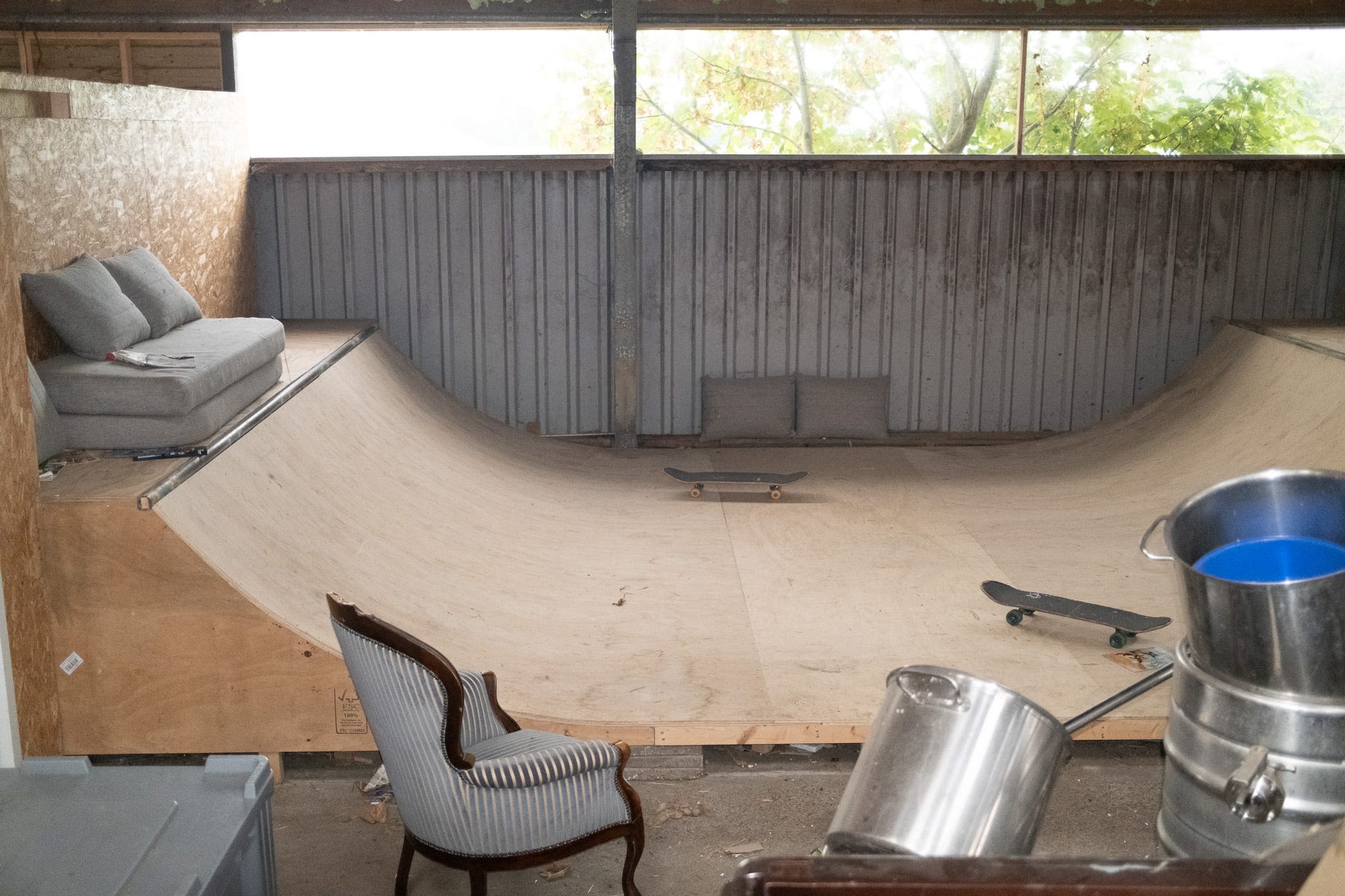
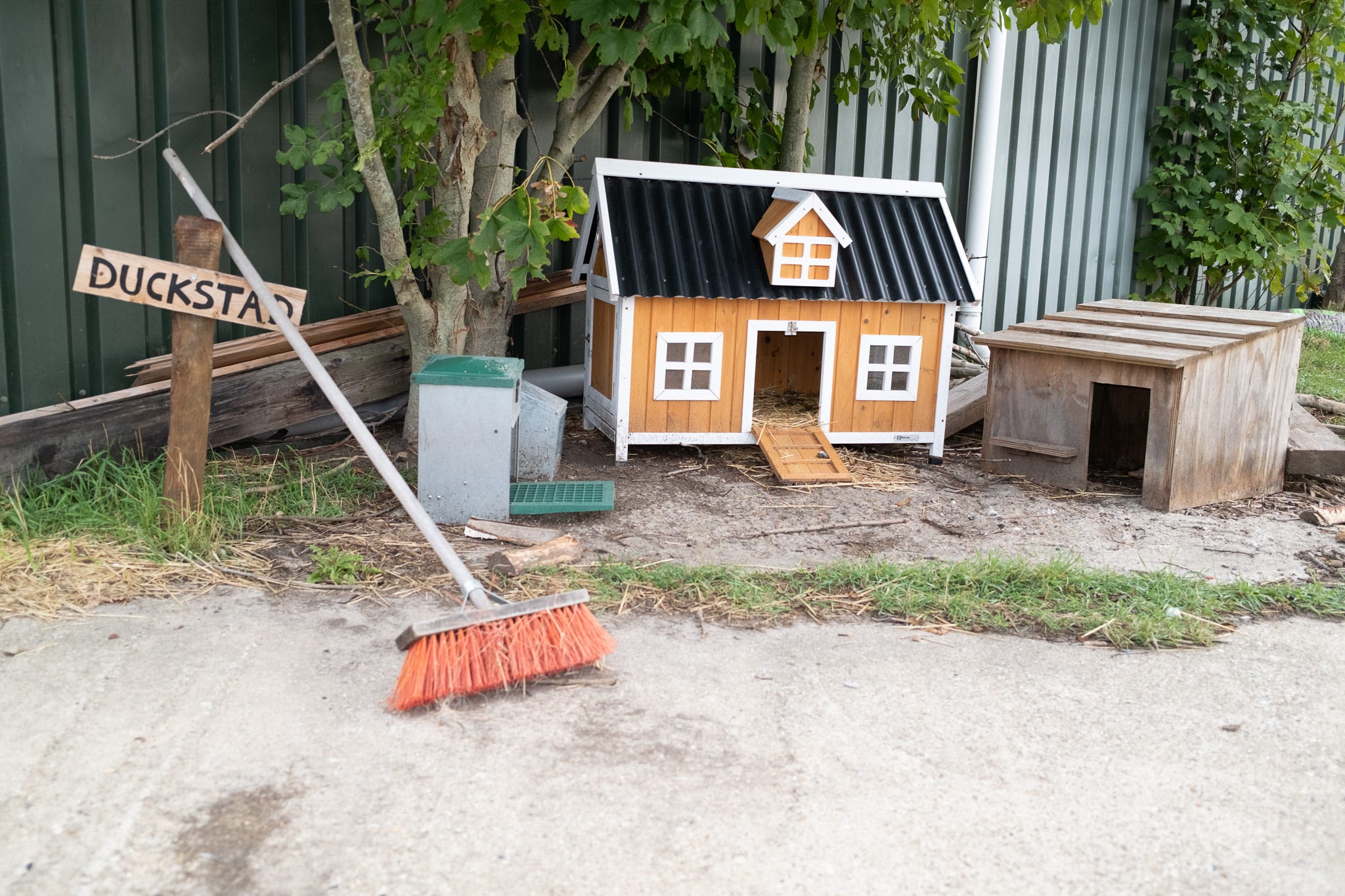
Robbert: We bought an old farm on Texel, between Den Burg and De Koog, with a few hectares of land attached. That land had all these old barns from a former dairy operation, full of asbestos. We’ve spent the last two years tearing down those barns, remediating all the asbestos, and by now everything’s nicely reseeded — grass everywhere, sheep roaming around, lots of fruit trees. We’re running a small agricultural operation with sheep, pigs, horses, goats, chickens, you name it. And soon the farm shop will be added, which we’ll stock with things we grow and make here ourselves.
John: I think that’s exactly what we want to talk about: everything you’re doing here. But before that we really have to go back to 2014, 2015 — Uiltje. You’ve always been into flavor, into making sausage, into all sorts of things. Yeah, very much a Robbert thing, all kinds of stuff mixed together, intuitive. But—

Robbert: It actually goes back a lot further than that. When I was fifteen I started my first part-time job at a restaurant, and honestly that’s always been the common thread through my life: everything I’ve done has somehow revolved around food or drink, or making things myself. At some point it was cider — interesting, I’ll try that sometime. Cheese — also interesting, I’ll try that too. Beer obviously became the biggest thing, but food has run through all of it the whole time. Sausage-making — interesting, I’ll do that sometime too. Bread — interesting, let’s figure out how that works. I’ve now been baking my own sourdough bread every day for about eight years. Those are the kinds of things that just keep running through it all. And that’s really what I wanted again: to make things the way I did at the start, do things myself, make things myself. Someone once asked me what the best moment was that I experienced with Uiltje, with all those trips and places, and I said: the moment I was simply the brewer myself. Where all you’re doing is making recipes, brewing beer, making things — instead of all the red tape and the financial side of it. Just being creative and making things.

John: You use the word “recipes,” but very often there wasn’t actually a recipe at the end of it, right? You’d just stand over the kettle and do your thing.

Robbert: We did always end up with recipes, because you want to be able to reproduce it. You always start on paper with an idea: hey, what are we going to do? Along the way you’d sometimes add stuff — “throw in a bit more, add this” — like decorating a Christmas tree in the kettle, seeing if it comes out nice. It’s always been a bit of a spielerei, but it always got turned into something reproducible in the end.

John: I sometimes compare you to a chef who adds a pinch of salt by feel, something that’s not in the recipe. I’ve always found you to be a pretty intuitive chef.

Robbert: Definitely, and that’s still true. I remember one great moment standing at the mash kettle. We’d made our own orange extract, entirely alcohol-based. Roel was up on the tank above and I was down below. He asked, “How much goes in?” I did this hand gesture: “Yeah, just a splash.” He said, “Yeah, but how much is that?” I said, “Just a bit, you know.” So he grabs the jerry can and pours in a splash. Turned out to be way too much — that beer sat against the wall for, I think, half a year, way too much orange flavor. That’s how it always went, a bit on intuition, and sometimes it went too far.
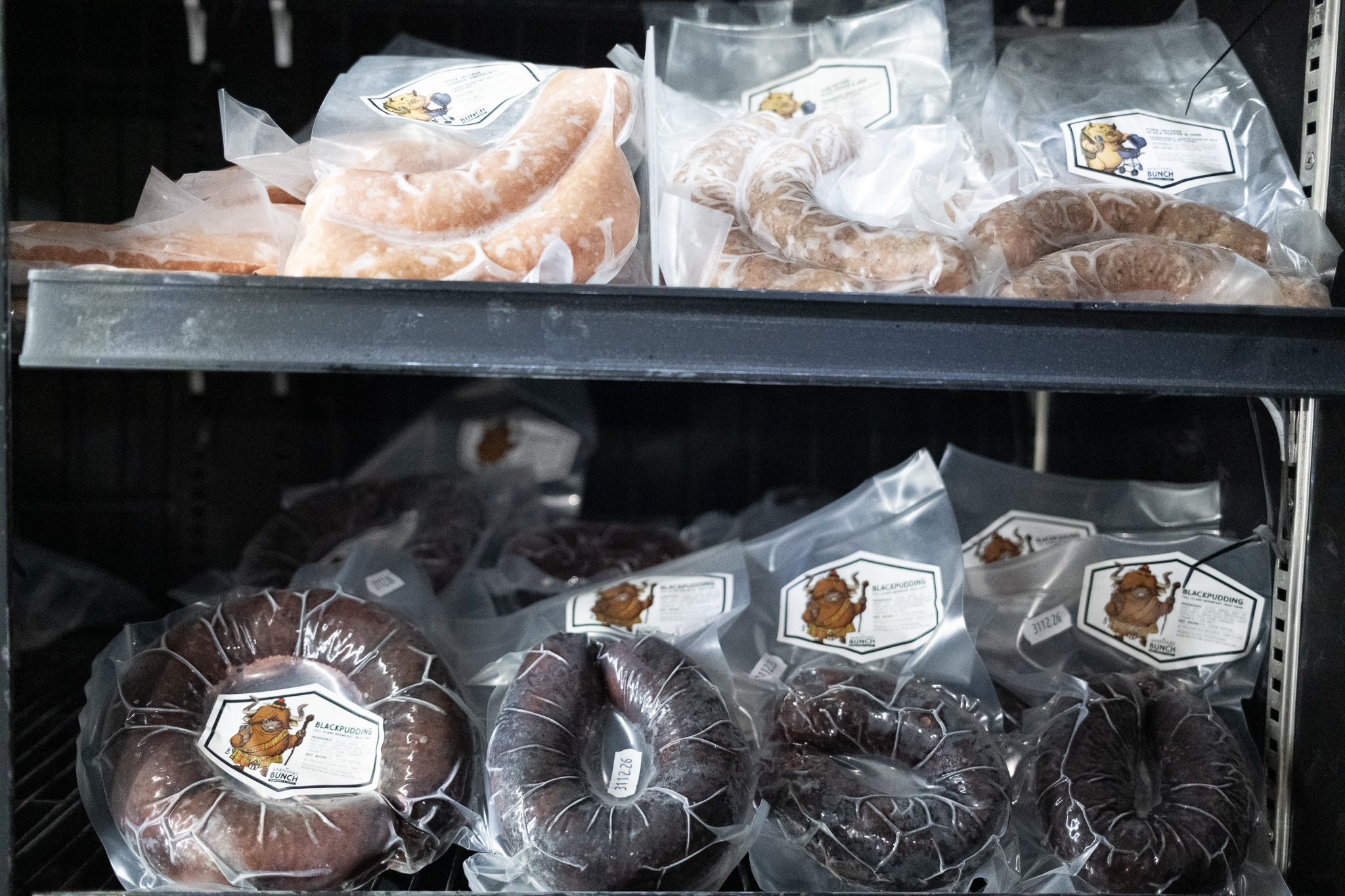
John: And I see that same mindset now. You just showed me the fridge, with all those sausages with unusual flavors. Back in the day you’d give those “Granny’s Cooking Recipes” beers a little name and a story, but really you’ve always been bringing flavors together.

Robbert: Yeah, that’s also true of cooking, that kind of thing. We now have a farm shop with a lot of products from our own land, but also lamb and pork, all organic, from our own animals, where we know exactly where it comes from. I had this feeling that if you buy a lamb sausage at the store, it’s always the same standard sausage, the same thing every time. That was maybe also true of beer back in 2012: all craft, nicely filtered, blond, all pretty much the same. And I thought: no, something different needs to happen there. That happened with beer back then, and now I’m at the same point again with this meat counter and sausage-making. So I’m just applying that “Granny’s Cooking Recipes” approach here on the island. I’m starting out soon with about eight kinds of lamb sausage, with all kinds of wild combinations — candied fruit and that sort of thing. And I haven’t even mentioned barrel aging yet, but that’s on the plan too.

John: Tell me a bit about those flavors, because they’re pretty unusual.

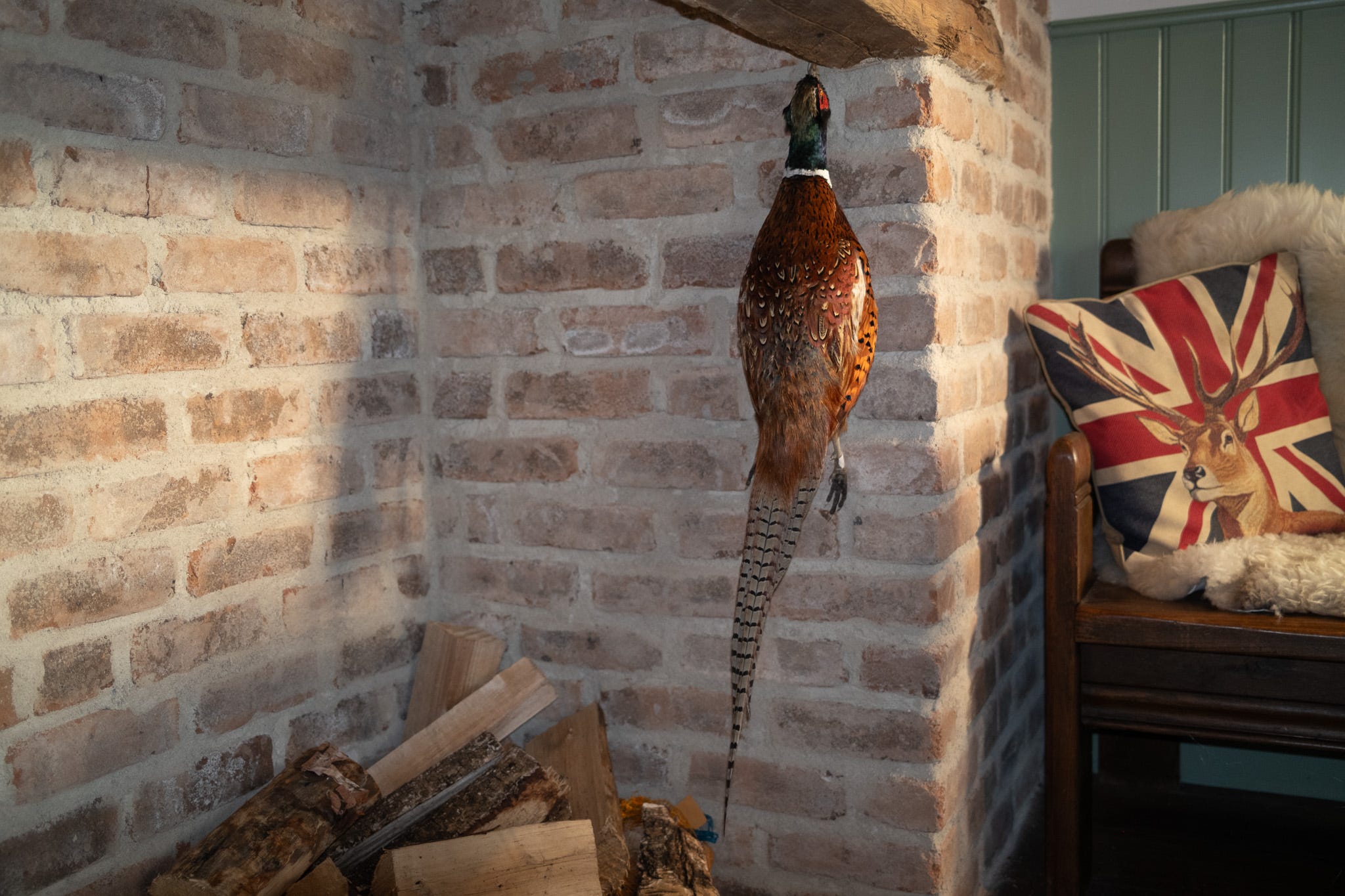
Robbert: For example, I’ve got a pork sausage with a homemade blue cheese, a kind of stilton, with poached pear and veal jus in it. We’ve got a lamb sausage with goat cheese from a Texel goat farm, with lemon juice, lemon zest, and mint in it. We’ve got a lamb sausage with apricot and green curry. And of course the classics too — roasted garlic, sea salt, rosemary, that kind of thing. Those are just tasty too, so those get in the mix now and then as well. There’s a lot of fruit in what I make. We also make our own black pudding, with apple in it. And right now we’ve got tons of sage from our own garden, which we dry with black pepper. Those are kind of like Kent classics — well-known English sausages that we don’t have in the Netherlands, and I bring a bit of that over here.

John: Is jam maybe a good example of that too?

Robbert: Yeah, we’ve got about fifteen kinds. One of them, for instance, is apricot, peach, and “hoorntjes” — a Texel specialty, a cross between a filled cookie and a butter cake, worked into a jam. That’s exactly the fun part of that “Granny’s Cooking Recipes” approach, because nobody else knows that combination. I also want to age part of a jam in a bourbon barrel, and then reuse that barrel for the next jam.
John: How are you actually being received here — an enthusiastic guy from Haarlem, on an island like this?

Robbert: The shop’s not open yet, I’m still very much in development — that’ll open at the end of this year. It’s an old farm we bought, in a small community where you do everything together. We’ve got two young kids. I’m doing all the remediation, demolition, and building myself, and here that’s something you do with the people around you. I’ve been incredibly busy with it, with everyone here, and I love that. I get asked from all sides to give talks for local business clubs. It’s a funny coincidence — or maybe not really a coincidence — that my very first tap takeover ever, outside of Haarlem, was right here on Texel, at the inn by the Twaalf Balken, because Dirk Breedveld, the beer guy on Texel, was always a huge Uiltje fan. So I’ve spent a lot of time here in the past, done a bunch of events, and because of that a lot of people here already know Uiltje, because they used to have Uiltje on tap.

John: Something I find funny too: you seek out all these local craftspeople, working alongside other makers.

Robbert: Yeah. Take Texels Brander — the only really good coffee roaster on Texel. They roast beautiful coffee, and it’s the same with a bunch of other people: painters, craftspeople, fishermen, sheep farmers. You really try to do as much as possible from right here on the island.

John: Is that a deliberate focus for you?

Robbert: Yeah. As a Texelaar — well, I’ll never really be a true Texelaar, since I wasn’t born here, but I’m fine with that. It’s a small community, and that’s something you really have to do with the people here. It’s not fun to show up as an outsider with your Randstad mentality and say, “We know how this works, we’ll just do it ourselves without the people from the mainland.” I actually enjoy doing it together here — I’m here to build my life too. Sometimes you pay a bit more for it, but it doesn’t matter, you just do it together here, and that’s part of it.

John: Texel obviously gets incredibly busy in the summer, and I’ve always found it hard to find really artisanal food here. But yesterday, after dinner, you just popped out for ice cream. You hopped on the quad, and eight minutes later you were back with eight cups of delicious ice cream.

Robbert: That’s Texel’s own little ecosystem at work. In De Koog, for instance, there’s a big dairy farm with cows, and they make ice cream right there on the farm from that milk, and sell it themselves too. We’ve also got our own bee colony here that only exists on Texel — bees aren’t even allowed to be brought over from the mainland. Soon we’ll have our own bees too. There’s one butcher and slaughterhouse on Texel, and only Texel animals come from there. We’ve got our own harbor here with our own fishing fleet. It’s really its own ecosystem: everything’s grown here, everything’s done here, and for the most part it all stays on the island too. That’s what keeps the craftsman going — you go to the butcher for your meat. Of course you’ve also got a Plus, an Albert Heijn, and a Jumbo, where you buy the same products as the rest of the Netherlands. But that little slice of small-scale craftsmanship is still really beautifully present here — the baker where you get fresh sourdough bread every day, made right there.
John: That’s really nice, especially if you love honest food and great flavors.

Robbert: Yeah, and I want to contribute a little to that in my own way. There’s a shop coming, in a few months.

John: When exactly?

Robbert: We’d actually wanted to open as early as May, but we’re still renovating the front and working on the old farmhouse we bought along with the property. The facade still needs to be done too. So it’s still a bit of a construction site, which doesn’t really work well for a shop. It won’t be by the end of October, but by January 1st at the latest we’ll definitely be open, and I’m hoping we can open a nice little spot even before that.

John: Let’s talk about the shop’s name in a bit, that’s important too. But first: you’ve got all these barns, electricity, solar panels — you’ve put in a huge amount of work here, and you did most of it on your own.

Robbert: When putting up a barn I got some help with the framing here and there, but otherwise I did everything myself — electricity, all of it. Exactly like with Uiltje. Roos always says I’ve got a very high Pippi Longstocking factor: “I’ve never done this before, but I think I can.” It also just started out as a budget thing — what can you do yourself? I don’t like handing someone money and saying, “Just go build it.” I’d rather take that journey myself and make it myself. Just like in the early days of Uiltje: I started the brand in 2012, and then I needed a website, because people need to be able to find you. If you don’t have the budget for a website, you teach yourself HTML and build the website yourself. It was the same story here: how are we going to do this? You just start. I had the demolition and the debris removal done by someone else, but after that I filled thousands of sheets of paper with sketches and drawings, with all my ideas for what I wanted to achieve here. And then at some point you just start building it yourself. You can get quotes from people — what does this cost, what does that cost — but then I think, how long will that take, I can do it better myself and it costs nothing, so I’ll just do it myself. It’s been hard work, two years of it, but now, after those two years, it’s definitely been worth it.

John: This is actually the first time I’ve been here, and that’s partly on you — always, “Hang on, I’ve got to finish the barn first,” “No, I’ve got to set up the campsite first.” So I’d actually wanted to come by much earlier.

Robbert: True, but before this it was really just a big pile of rubble, there was nothing to see. At best you could see the potential, but otherwise there was nothing there. Now we’re getting to the final stretch: we’ve got a nice courtyard garden now with herbs and a fire pit, the fruit trees are in, the barns are built, the farmhouse is almost done, the pub’s done, the shop’s almost done, the stable’s done. We’ve got lambs running around and piglets that were just born. That gives it a totally different feel — you arrive somewhere and immediately think: this is nice. And then it’s also a lot more fun to invite people over.

John: Let’s talk about the shop out front. That’s not going to be a beer shop, and you’re not brewing anymore yourself, or are we coming back to that?

Robbert: No, I don’t brew myself anymore. I’m not starting a commercial brewery again. The same passion for making things is still there, just not in beer anymore. I do apparently seem to be making something out of cider apples this year too — we’ll see what comes of it, but that’s purely for personal use, not for sale. In a farm shop it’s obviously nice to have your own beer too, though. Maybe at some point that’ll turn into a fun collaboration with another Texel brewery.
John: And what else is going into the shop?

Robbert: All the sausages are going in. On brand for Robbert, it typically starts with bone marrow. The first thing I saw when I walked in here was bone marrow too. In the end it’s all about making things, making products. The shop is about honest food. The shop is called the Barnyard Bunch.

John: Why that name?

Robbert: Barnyard Bunch is roughly the translation of “the farm gang.” When I was younger, in my teenage years, I actually wanted to become a cartoonist and illustrator. Then I was told you couldn’t make a living doing that, so I ended up doing something else. But I’ve always thought cartoons were beautiful, and I’ve always combined that with Uiltje too. So I thought: I’ll go back into that same corner and work with cartoons again now. It’s a farm shop with only our own products — everything we make comes from right here, from our own organic tomatoes that we turn into sauce, to everything else.

It’s going to be an English farm shop, with English products; I still want a piece of England and an identity of our own. It’s different from what other people here are doing, so I’m not stepping on anyone’s toes. We’ve got lots of chutneys, lots of kinds of jam. Sourdough bread every day. We’re also going to make our own stilton-style cheddar. Fresh eggs every day from our own animals and chickens. And lots of sausage: lamb sausage, pork sausage, haggis, black pudding. It’s also about nose-to-tail eating — if you’re going to eat meat, do it consciously. We use everything we can from our animals, even the bones. So a farm shop with a bit of everything in it, but wrapped in a fun, creative brand, instead of just a label that says “strawberry-peach jam.”

I also just enjoy turning that into a creative, entertaining brand, same as with Uiltje. If you pick up a jar of jam, a can of beer, a box of eggs, or a six-pack of new barrel-aged beers, the idea is that the artwork and the story around it alone should give you a smile. Our egg carton is almost becoming a kind of gift you could give someone, just because it’s such a fun box.

John: Just to be clear: you’ll be back behind the sausages, and Roos will be up front in the shop. So this is really a family business and a family shop.

Robbert: Yeah, I love that too. That’s actually something I mention a lot on my Instagram: “family owned farm shop.” It’s really ours. With Uiltje, at a certain point it got really big, and then you’re dealing with investors and other people’s interests. I don’t have that here — this is really ours, mine and my kids’. Our oldest son just turned ten, and he already says things like, “I’m going to work in the shop on Saturdays.” I love that we’re really doing this all together. My daughter is turning seven now, and this is also something we do together, at least if they enjoy it. But at the very least I can offer them a place — something I couldn’t offer them anymore as a brewer inside a big brewery, I can now offer in something I find really interesting, and that I think they can find something in too.

Roos is going to run the shop, she’ll handle the front-of-house side. I’m going to start making all the products, being nicely absorbed in the kitchen and making products for myself. At some point staff will come on board too, but that’s more of a spring thing.
John: So then the big question: are you homesick for Haarlem?

Robbert: No, I think that’s pretty clear.

John: But are you homesick for brewing?

Robbert: No, no homesickness for brewing. Maybe a little for the stretch from 2012 through 2016, 2017, when I was still standing at the kettles myself, stirring, actually brewing myself. I loved that. After that it became more and more about the business side, which was fun in its own way too, with a lot of creative stuff and marketing around it. But now I’m going back to the roots of where I actually started, and honestly I find that even more fun than that later period: just making things myself again. I do have to be careful not to let it get too big again, because that’s not the goal.

John: I don’t know about that — aren’t you ultimately a “big thinker”?

Robbert: No, not really, just a fun collab here, a fun shirt there, that’s pretty much it. It doesn’t have to be “go big, go home” right away. But of course that’s ultimately where the fun comes from, and there’s a lot I learned during all those Uiltje years that I’m applying now too. We’re just a small farm shop right now, but our shirt, for example, is a collab with Butcher of Blue — people I know from my old days. Now we’ve got a shirt with them. Why would I do that, when you could just as easily get a cheap, simple shirt made with your own logo on it? Because this is a lot more fun, and the design is a lot more fun. If I get more excited about it myself, I think the customer ultimately notices that too, same as with Uiltje. You’ve got to do what you actually enjoy, and not make things that don’t make you happy.

John: And for the Uiltje fans: they can all just come by here too, right? But let’s be precise, it’s not a public pub.

Robbert: Right, that might be a bit of a shame, but this is really purely a private farm canteen. The pub is really only for the farm, for us and for the staff — it’s our canteen, not open to the public. Soon we’ll have two B&Bs, a cottage, and a small campsite where you can stay overnight. Then you’ll also have access to the farm: you can look in the barns, visit the lambs and sheep, there are benches everywhere where you can sit and enjoy the countryside, since that’s obviously what we’re surrounded by here. Then you’re welcome in the pub too — you still won’t get beer here, but you can sit by the fireplace if it’s raining outside. That’s kind of like an extra living room. The shop out front is open to the general public, though — that opens starting early 2027, for your jam, your daily bread, cheese, cold cuts, eggs, something for a picnic or a barbecue.
John: I’ve known you for ages, and to me this really feels like a dream come true.

Robbert: Yeah, these are honestly things I’ve been carrying with me my whole life, like a big melting pot. All my own interests, everything I’ve ever been drawn to, I’ve pulled together and shaped into an idea. It’s always been my dream to live out in the countryside. And what’s the best thing you can give your kids in 2026? Good health. So: knowing where your food comes from. Everything’s grown here, we make everything ourselves, it’s all organic, that just matters a lot to me. Roos, my wife, always wanted a farm too, so for her this is also a kind of dream come true, being able to spend every day with sheep and everything that comes with it. Because say what you want, it’s really fun to run a brewery with thirty, forty staff, cafes, all that kind of thing, that’s really cool. But a farm never stops. With a brewery, at the end of the day you can say, “Okay, I’m going to bed.” A farm just keeps going twenty-four hours a day.

John: I’ve experienced that myself too, with that rooster that starts up at four in the morning.

Robbert: Unfortunately, yeah. But this is great fun.

John: We’re going to make breakfast in a bit, brunch. What are you going to make?

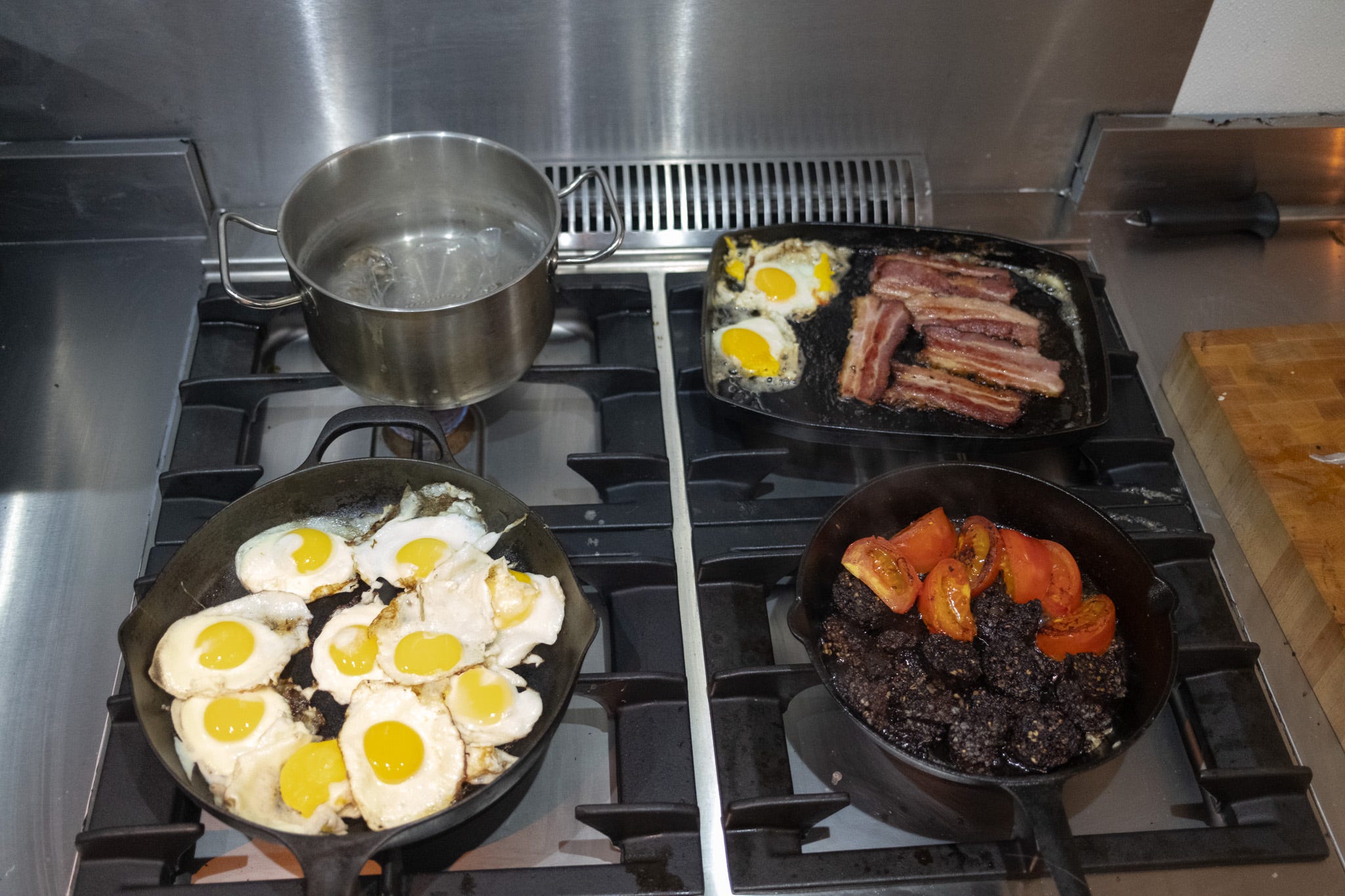
Robbert: Well, we’re going to make a real Full Island Breakfast, as I call it here. We’ll have a nice egg from our own chickens, some black pudding, our homemade haggis, a couple of nice sausages we made ourselves — an orange marmalade sausage and a black pepper and sage sausage — and some bacon I smoked myself over applewood here. Along with sourdough bread and some tomato, which we still need to pick from our own greenhouse. I’m going to make something tasty for everyone — my kids will be hungry in a bit too, they’re out and about, so we’ll make them something as well. And whenever I’m in Haarlem I always stop by, see some familiar faces, swing by the brewery, see what nice things they’re brewing, what new beers and names there are. I was at the brewery recently and saw all the new beers lined up, and then I saw the Gremlins beer sitting there — that one had stuck in my head, in my mental book of things I never got to make with Uiltje. I was pretty proud that they went ahead and made it happen.
John: Keep coming back to Haarlem, you’re always welcome.

Robbert: For sure, and if people are ever near Texel, shoutout — send a message, and I’ll do a little plug here: info@barnyardbunch.nl, or you can just go to www.barnyardbunch.nl. Right now there’s still a temporary website up, but starting January 1st everything will be open and live. So come on by!

John: Come on, let’s eat! Cheers!

Robbert: Cheers, thank you.

DUTCH TRANSCRIPT

Robbert Uyleman, Texelse boer:

“Ik brouw zelf niet meer, maar dezelfde passie voor het maken van dingen is er nog steeds”

Afgelopen weekend sprak Uiltje-schrijver en creatief John Weich af met Uiltje-oprichter Robbert Uyleman op zijn boerderij-in-opbouw op het noordelijke Nederlandse eiland Texel. Robbert, die Uiltje in 2012 oprichtte en het bedrijf een decennium later verliet, verhuisde in 2024 naar Texel. De afgelopen twee jaar heeft hij met eigen handen een voormalige melkveehouderij omgevormd tot een kleine agroboerderij. De twee vrienden kennen elkaar al heel lang, maar het was John’s eerste bezoek aan de boerderij. Na een avond vol Britse bitters en het ophalen van herinneringen (Café du Théâtre eigenaar en goede vriend Tjerk Schreurs was er ook bij), haalde John op de tweede dag zijn recorder tevoorschijn en nam een gesprek van een half uur op. Veel plezier

John: Die stem komt bekend voor. Goedemiddag!

Robbert: Goedemiddag. Met Robbert Uyleman.

John: Old McRobbert Uyleman had a farm...

Robbert: McRobbert has a farm. Ja, dat is wel een change of scenery, zeg maar.

John: We zitten bij Robbert op zijn boerderij op Texel. Ik geef het adres nog niet door, anders komen hier straks allemaal mensen naartoe. Je bent de laatste paar jaar je eigen ding aan het doen. Wij houden natuurlijk contact, dus ik ben wel op de hoogte, maar misschien is het ook leuk voor de mensen van Uiltje en de Uiltje Universe, die jou al die jaren gevolgd hebben, om te horen wat je nu doet. Dus laten we daarmee beginnen: wat doe je nu?

Robbert: Wij wilden eigenlijk al jarenlang iets anders. Gewoon weg uit de drukke Randstad, dat was een van de dromen die we al heel lang hadden. We zijn heel lang bezig geweest met kijken naar een boerderij in Engeland, maar dat werd een hele grote stap. Ik heb ook twee kleine kinderen. Iets met schapen, met boeren, heeft ons altijd geïntrigeerd, en Engeland trok me al heel lang. Toen zijn we eigenlijk gewoon Nederland doorgegaan van: waar willen we dan heen, wat is een mooie plek? En we kwamen er niet uit. Tot ik op een gegeven moment met mijn dochter op Texel was. Ik dacht meteen: wauw, dit is eigenlijk best wel cool. Ik appte naar mijn vrouw Roos: “Hoe zou jij het vinden om naar Texel te gaan?” En ik kreeg gelijk terug: “Oké, goed.” Dat was in juli, en al in oktober kochten we dit.

John: Even terug naar de basis: je wilde weg uit Haarlem en op zoek naar een nieuw avontuur.

Robbert: Ja, dat zat er eigenlijk al veel langer in, ook toen we nog met Uiltje bezig waren. Ergens rond 2016, 2017 — voor corona nog — waren we heel druk bezig met allerlei nieuwe dingen: we wilde een Uiltje-bar op Schiphol en we waren ook aan het onderzoeken of we een Uiltje-brewpub in Manchester of zoiets konden openen. Op een gegeven moment werd dat een serieus gesprek en dacht ik: als we dit gaan doen, dan wil ik me daarop focussen, want dan kan ik daar mijn droom om ooit naar Engeland te gaan mee vervullen. Maar dat ging uiteindelijk niet door. Dus dat idee van weg uit Haarlem naar Engeland zat er altijd al in. Het werd uiteindelijk Texel. Ook een eiland, ook met veel schapen en best wel een eigen eilandcultuur. Dat is misschien ook waarom ik me hier meteen zo thuis voelde.

John: Beschrijf eens even waar we nu precies zitten, want ik ben er voor het eerst. Ik ken al die plannen wel, we hebben er onderweg af en toe over geappt en je stuurde foto’s, maar we zitten nu letterlijk in een Engelse pub op je boerderij.

Robbert: Ja, precies.

John: Je hebt Engeland hiernaartoe gebracht, niet andersom.

Robbert: We moesten een plek hebben op de boerderij, ook omdat we bezoek krijgen van vrienden, maar ook omdat we een paar ideeën hebben rond het tegengaan van eenzaamheid bij oudere mensen. Daar willen we een plek voor bieden, waar mensen gezellig kunnen zitten, sociaal contact hebben. Roos noemt dat altijd “Leonie’s plek” — daar wilden we iets voor hebben. Daarnaast hebben we ook gewoon een kantine nodig op de boerderij, voor de dames die hier de paarden verzorgen en voor onszelf, om af en toe te lunchen en te zitten. Toen dacht ik: wat nou als ik daar zelf iets ga bouwen? Ik had een oude schuur, en die heb ik voor een deel omgebouwd tot bar. Families and Muddy Boots Welcome, zeg maar. Een laag plafond met houten balken, een grote open haard, precies zoals al mijn pub-bezoeken in al die jaren met Uiltje. Ik heb altijd gezegd: laten we in Engeland vooral daarop focussen, want daar hadden we altijd veel mooie plekken, en dan kon ik daar makkelijk heen en weer. Dus dat heb ik hierheen gehaald: ik heb hier mijn eigen farmhouse-pub gebouwd, inclusief twee taps met twee originele Engelse Angram handpulls. Bier brouwen zit er namelijk toch nog wel ergens in, niet meer de zware double IPA’s en Imperial stouts, maar eigenlijk stiekem altijd al mijn eigen favoriete bierstijl: Britse ales. Bitters, porters, pale ales, allemaal tot zo’n 4% alcohol.

John: In de koelkast hebben we gisteren nog aardig wat Uiltje-bieren gedronken.

Robbert: Ik was een paar dagen geleden nog in de brouwerij en heb wat meegenomen. Ik komt daar nog wel eens over de vloer, en af en toe komen de jongens ook hier langs. Dan krijg ik weer een doosje bier mee, dat gaat gewoon de koelkast in. Altijd fijn om te hebben.

John: Het is een hele fijne plek, laten we daarmee beginnen. Maar even naar buiten kijken: dit is niet zomaar een hobbyboerderij, dit is echt een working farm. Beschrijf eens de omgeving, je bent hier nu twee jaar aan het werk.

Robbert: We hebben een oude boerderij gekocht op Texel, tussen Den Berg en De Koog, met een aantal hectare grond erbij. Op dat land stonden allemaal oude schuren van een voormalig melkveebedrijf, vol asbest. We zijn nu twee jaar bezig geweest met het weghalen van die schuren, het saneren van al het asbest, en inmiddels is alles weer mooi ingezaaid, overal ligt gras, overal lopen schapen, er staan veel fruitbomen. We zijn bezig met een klein agrarisch bedrijf met schapen, varkens, paarden, geiten, kippen, noem maar op. En straks komt daar de boerderijwinkel bij, die we gaan vullen met dingen die we hier zelf verbouwen en maken.

John: Ik denk dat dat precies is waar we het over willen hebben: alles wat je hier aan het doen bent. Maar daarvoor moeten we eigenlijk terug naar 2014, 2015 — Uiltje. Je bent altijd al bezig geweest met smaak, met worst maken, met van alles en nog wat. Ja, op z’n Robberts, alles een beetje door elkaar, intuïtief. Maar

Robbert: Het gaat eigenlijk nog veel verder terug. Toen ik vijftien was begon ik mijn eerste bijbaantje in een restaurant, en eigenlijk is dat altijd de rode draad in mijn leven geweest: alles wat ik gedaan heb, draait op een of andere manier om eten of drinken, of om dingen zelf maken. Op een gegeven moment cider maken — interessant, dat ga ik ook een keer doen. Kaas maken — ook interessant, dat ga ik ook een keer proberen. Bier is daar natuurlijk het grootst in geworden, maar eten is er altijd doorheen blijven lopen. Worst maken — interessant, ga ik ook een keer doen. Brood — interessant, laten we eens uitzoeken hoe dat werkt. Ik bak inmiddels al zo’n acht jaar elke dag mijn eigen zuurdesembrood. Dat zijn dingen die er altijd doorheen blijven lopen. En dat wilde ik eigenlijk weer: dingen maken zoals in het begin, zelf dingen doen, zelf maken. Iemand vroeg me dat ooit, wat het mooiste moment was dat ik met Uiltje hebt meegemaakt, met al die reizen en plekken, en ik zei: het moment dat ik gewoon zelf de brouwer was. Waarbij je alleen maar bezig bent met het maken van recepten, het brouwen van bier, het maken van dingen in plaats van alle rompslomp en de financiële kant eromheen. Gewoon creatief bezig zijn met maken.

John: Je noemt het woord “recepten”, maar heel vaak kwam daar helemaal geen recept uit, toch? Je stond gewoon boven de ketel en deed gewoon je ding.

Robbert: We hebben wel altijd recepten gemaakt, want je wilt het kunnen navolgen. Je begint altijd op papier met een idee: hey, wat gaan we doen? Onderweg werd er weleens wat aan toegevoegd — “gooi er nog wat bij, doe dit erin” — kerstboom in de ketel, kijken of het mooi wordt. Het is altijd een soort spielerei geweest, maar het werd uiteindelijk wel reproduceerbaar gemaakt.

John: Ik vergelijk je weleens met een chef die op gevoel een snufje zout toevoegt, iets wat niet in het recept staat. Ik heb je altijd een intuïtieve chef gevonden.

Robbert: Zeker, en dat is nog steeds zo. Ik herinner me een heel mooi moment dat ik bij de roerende brouwketel stond. We hadden zelf een sinaasappelextract gemaakt, helemaal op basis van alcohol. Roel stond op de tank daarboven en ik stond beneden. Hij vroeg: “Hoeveel moet erin?” Ik deed met mijn handen zo’n gebaar: “Ja, gewoon een scheutje.” Hij vroeg: “Ja, maar hoeveel is dat dan?” Ik zei: “Gewoon zo’n beetje.” Dus hij pakt de jerrycan en gooit er zo’n scheut in. Bleek dat veel te veel te zijn, het bier heeft daarna denk ik een half jaar tegen de muur gestaan, veel te veel sinaasappelsmaak. Zo ging het altijd een beetje op intuïtie, en soms schoot dat te ver door.

John: En dat gedachtegoed zie ik nu terug. Je hebt me net de koelkast laten zien, met al die worsten met bijzondere smaken. Vroeger gaf je aan die “Granny’s Cooking Recipes”-bieren allemaal een naampje en een verhaal, maar je hebt eigenlijk altijd al smaken bij elkaar gebracht.

Robbert: Ja, dat zit ook in koken, in dat soort dingen. We hebben nu een farmshop met heel veel producten van eigen land, maar ook lamsvlees en varkensvlees, allemaal biologisch, van onze eigen dieren, waarvan we precies weten waar het vandaan komt. Ik had zoiets van: als je een lamsworst in de winkel koopt, is het eigenlijk altijd dezelfde standaardworst, elke keer weer hetzelfde. Dat was in 2012 misschien ook wel zo met bier: allemaal ambachtelijk, mooi gefilterd, blond, allemaal net hetzelfde. Toen dacht ik: nee, daar moet iets anders in gebeuren. Dat gebeurde toen met bier, en nu zit ik met deze vleeshoek en worstmakerij weer op hetzelfde punt. Daar ga ik dus gewoon mijn “Granny’s Cooking Recipes”-aanpak op het eiland toepassen. Ik begin straks met een stuk of acht soorten lamsworst, met allemaal gekke combinaties: gekonfijt fruit en zo. En ik heb het nog niet eens over barrel aging gehad, maar dat staat ook al in de planning.

John: Vertel eens iets over die smaken, want die zijn best bijzonder.

Robbert: Ik heb bijvoorbeeld een varkensworst met een zelfgemaakte blauwaderkaas, een soort stilton, met gepocheerde peer en kalfsjus erin. We hebben een lamsworst met geitenkaas van een Texelse geitenboerderij, met citroensap, citroenrasp en munt erin. We hebben een lamsworst met abrikoos en groene curry. En natuurlijk ook klassiekers, met gepofte knoflook, zeezout en rozemarijn, dat soort dingen. Die zijn ook gewoon lekker, dus die mogen er af en toe ook bij. Er zit veel fruit in wat ik maak. We maken ook onze eigen black pudding, met appel erin. En we hebben nu heel veel salie uit eigen tuin, die we drogen met zwarte peper. Dat zijn een soort Kent classics, bekende Engelse worstjes die we in Nederland niet kennen, en die haal ik dan een beetje hierheen.

John: Is jam misschien ook een mooi voorbeeld daarvan?

Robbert: Ja, we hebben zo’n vijftien soorten. Eén daarvan is bijvoorbeeld abrikoos, perzik en “hoorntjes” — een soort Texelse lekkernij, een kruising tussen een gevulde koek en een boterkoek, verwerkt in een jam. Dat is precies het leuke van die “Granny’s Cooking Recipes”-aanpak, want dat kent verder niemand. Ik wil straks ook een deel van een jam laten rijpen op een bourbonvat, en dat vat dan weer gebruiken voor een volgende jam.

John: Hoe word je hier eigenlijk ontvangen, zo’n enthousiaste jongen uit Haarlem op zo’n eiland?

Robbert: De winkel is nog niet open, ik ben nog volop in ontwikkeling, die gaat eind dit jaar open. Het is een oude boerderij die we gekocht hebben, in een kleine community waar je alles samen doet. We hebben twee kleine kinderen. Ik ben zelf aan het saneren, slopen en bouwen, en dat doe je hier met de mensen om je heen. Ik heb het er ontzettend druk mee, met iedereen hier, en dat vind ik hartstikke leuk. Ik word van alle kanten gevraagd om presentaties te geven voor ondernemersclubjes. Toevallig — of eigenlijk niet toevallig — was mijn allereerste tap takeover ooit buiten Haarlem hier op Texel, in de herberg bij de Twaalf Balken, omdat Dirk Breedveld, hier de bierhandelaar van Texel, altijd al een groot Uiltje-fan was. Zo ben ik hier vroeger al heel veel geweest, heb ik verschillende events gedaan, en daardoor kennen veel mensen hier Uiltje ook, omdat ze destijds Uiltje op de tap hadden.

John: Wat ik ook grappig vind: je zoekt hier al die ambachtslieden op, samen met andere makers te werken.

Robbert: Ja. Neem Texels Brander, de enige echt lekkere koffiebranderij op Texel. Zij branden prachtige koffie, en zo is het met meer mensen: schilders, ambachtslieden, vissers, schapenboeren. Je probeert echt zoveel mogelijk vanaf het eiland te doen.

John: Zet je daar bewust op in?

Robbert: Ja. Als Texelaar — nou ja, ik zal zelf nooit een echte Texelaar worden, want ik ben er niet geboren, maar dat vind ik prima. Het is een kleine gemeenschap, en dat moet je hier ook echt met de mensen doen. Het is niet leuk om als buitenstaander met je Randstadmentaliteit hierheen te komen en te zeggen: “Wij weten wel hoe het moet, we gaan het hier zelf wel doen zonder de mensen van de overkant.” Ik vind het juist leuk om het hier samen te doen, ik ben hier ook om mijn leven op te bouwen. Soms betaal je daar iets meer voor, maar dat maakt niet uit, je doet het hier gewoon met elkaar, en dat hoort erbij.

John: Texel is in de zomer natuurlijk enorm druk en ik heb het altijd lastig gevonden om echt ambachtelijk eten te vinden. Maar gisteren na eten ging je even ijs halen. Je sprong op de quad, en acht minuten later was je terug met acht bekertjes heerlijk ijs.

Robbert: Dat is hier op Texel z’n eigen ecosysteem. In De Koog is bijvoorbeeld een groot melkveebedrijf met koeien, en van die melk maken ze op de boerderij zelf ijs, dat ze ook zelf verkopen. We hebben hier ook een eigen bijenvolk dat alleen op Texel voorkomt, er mogen zelfs geen bijen van de overkant bij komen. Straks hebben wij ook onze eigen bijen. Er is hier één slager en slachterij op Texel, waar alleen Texelse dieren vandaan komen. We hebben hier een eigen haven met eigen visserij. Het is echt een eigen ecosysteem: alles wordt hier verbouwd, alles wordt hier zelf gedaan, en voor een deel blijft het ook allemaal op het eiland. Dat houdt de vakman in stand, je gaat naar de slager voor je vlees. Natuurlijk hebben jullie ook gewoon een Plus, een Albert Heijn en een Jumbo, waar je dezelfde producten koopt als de rest van Nederland. Maar het stukje kleine ambachtsman is hier ook nog heel mooi aanwezig, de bakker waar je elke dag vers zuurdesembrood haalt, dat daar zelf gemaakt wordt.

John: Dat is heel mooi, zeker als je van eerlijk eten en mooie smaken houdt.

Robbert: Ja, en daar wil ik graag een beetje aan bijdragen op mijn manier. Er komt binnenkort, over een paar maanden, een winkel bij.

John: Wanneer precies?

Robbert: We wilden eigenlijk al vanaf mei open, maar we zijn ook nog aan het verbouwen aan de voorkant en bezig met de oude boerderij die we erbij gekocht hebben. Ook de gevel moet nog gedaan worden. Het is dus nog een beetje een bouwplaats, wat niet ideaal werkt voor een winkel. Eind oktober is het in elk geval nog niet, maar uiterlijk 1 januari zijn we zeker open, en ik hoop dat we in de maand daarvoor al een mooi plekje kunnen openen.

John: Even over de naam van de winkel, dat is ook belangrijk. Maar eerst: je hebt hier al die schuren, elektriciteit, zonnepanelen, je hebt hier ontzettend veel werk verzet, en dat heb je grotendeels alleen gedaan.

Robbert: Bij het plaatsen van een schuur heb ik weleens wat hulp gehad met de frames, maar voor de rest heb ik alles zelf gedaan: elektriciteit, alles. Precies zoals bij Uiltje. Roos zegt altijd dat ik een heel hoog Pippi Langkous-gehalte heb: “Ik heb het nog nooit gedaan, maar ik denk wel dat ik het kan.” Het begon ook gewoon budgettair — wat kun je zelf doen? Ik vind het niet leuk om iemand geld te geven en te zeggen: “Maak het maar.” Ik ga liever zelf die reis aan en maak het zelf. Net als in de begindagen van Uiltje: ik begon in 2012 met een merk, en toen had ik een website nodig, want mensen moeten je kunnen vinden. Als je geen budget hebt voor een website, dan leer je jezelf HTML en bouw je die website zelf. Zo ging het hier ook: hoe gaan we dit doen? We beginnen gewoon. Het slopen en het afvoeren van puin heb ik laten doen, maar daarna heb ik met pen en papier duizenden A4’tjes volgeschetst en getekend, met al mijn ideeën over wat ik hier wilde bereiken. En dan ga je op een gegeven moment gewoon zelf bouwen. Je kunt wel offertes opvragen, wat kost dit, wat kost dat, maar dan denk ik: hoelang duurt dat, ik kan het zelf beter en het kost niks, dus dan doe ik het toch zelf. Het is hard werken geweest, twee jaar lang, maar nu, na die twee jaar, is het zeker waard geweest.

John: Dit is trouwens de eerste keer dat ik hier ben, en dat komt deels door jou, steeds: “Wacht nog even, ik moet eerst de barn afmaken”, “Nee, ik moet eerst de camping neerzetten.” Ik had hier dus eigenlijk veel eerder langs willen komen.

Robbert: Klopt, maar hiervoor was het echt nog een grote puinhoop, daar zag je niks aan. Dan kun je hooguit de potentie zien, maar verder is er niks. Nu begint het laatste stukje: we hebben nu een mooie binnentuin met kruiden en een vuurplaats, de fruitbomen staan er, de stallen zijn gebouwd, de boerderij is bijna klaar, de pub is klaar, de winkel is bijna klaar, de stal is klaar. We hebben lammetjes die rondlopen en biggetjes die net geboren zijn. Dat geeft een heel andere flow, dan kom je ergens binnen en denk je meteen: dit is leuk. En dan is het ook veel leuker om mensen uit te nodigen.

John: Laten we het over de winkel aan de voorkant hebben. Dat wordt geen bierwinkel, en je gaat zelf ook niet meer brouwen, of kom je daar nog op terug?

Robbert: Nee, ik brouw zelf niet meer. Ik ga geen commerciële bierbrouwerij meer beginnen. Dezelfde passie voor het maken van dingen is er nog steeds, maar dan niet meer in bier. Ik schijn nu wel iets te gaan maken van cider-appels, dit jaar ook, we zien wel wat het wordt, maar dat is puur voor eigen gebruik, niet voor de verkoop. In een boerderijwinkel is het natuurlijk wel leuk om ook je eigen bier te hebben. Misschien wordt dat op een gegeven moment een leuke samenwerking met een andere Texelse brouwerij.

John: En wat komt er verder allemaal in de winkel?

Robbert: Alle worstjes komen erin. Op z’n Robberts begint dat typisch bij het beenmerg. Toen ik hier voor het eerst binnenliep, was het eerste wat ik zag ook beenmerg. Uiteindelijk gaat het om het maken van dingen en het maken van producten. De winkel gaat over eerlijk eten. De winkel heet de Barnyard Bunch.

John: Waarom die naam?

Robbert: Barnyard Bunch is zo’n beetje de vertaling van “het clubje van de boerderij”. Ik wilde vroeger, in mijn puberjaren, eigenlijk cartoonist en tekenaar worden. Toen werd me verteld dat je daar geen droog brood mee kon verdienen, dus toen ben ik iets anders gaan doen. Maar ik heb cartoons altijd prachtig gevonden, en dat heb ik ook altijd met Uiltje gecombineerd. Dus dacht ik: in diezelfde hoek ga ik ook nu weer met cartoons aan de slag. Het is een farmshop met alleen eigen producten, alles wat we maken, komt hier zelf vandaan, van onze eigen biologische tomaten waar we saus van maken, tot al het andere.

Het wordt een Engelse farm shop, met Engelse producten; ik wil toch een stukje Engeland en een eigen identiteit vasthouden. Het is anders dan wat anderen hier doen, dus ik zit niemand in de weg. We hebben veel chutneys, veel soorten jam. Elke dag zuurdesembrood. We gaan ook zelf een stiltonachtige cheddar maken. Elke dag verse eieren van onze eigen dieren en kippen. En veel worst: lamsworst, varkensworst, haggis, black pudding. Het gaat ook om nose-to-tail eten — als je vlees eet, doe het dan bewust. We gebruiken van onze dieren alles wat we kunnen gebruiken, zelfs de botten. Dus een farmshop met van alles erin, maar wel met een leuk, creatief merk eromheen, in plaats van alleen maar een etiketje met “aardbei-perzikjam” erop.

Ik vind het ook gewoon leuk om daar een creatief, entertainend merk van te maken, net als bij Uiltje. Als je straks een potje jam pakt, een blikje bier, een doosje eieren of een sixpack met nieuwe barrel-bieren, dat je dan alleen al door het artwork en het verhaal eromheen een glimlach krijgt. Ons eierdoosje wordt bijna een soort cadeautje dat je iemand kunt geven, gewoon omdat het zo’n leuk doosje is.

John: Voor de duidelijkheid: jij staat straks achter de worstjes, en Roos staat voorin de winkel. Dit is dus echt een familiebedrijf en een familiewinkel.

Robbert: Ja, dat vind ik ook heel mooi. Dat is iets wat ik ook op mijn Instagram vaak benoem: “family owned farm shop.” Het is echt van onszelf. Bij Uiltje werd het op een gegeven moment heel groot, en dan krijg je te maken met investeerders en andere belangen van andere mensen. Dat heb ik hier nu niet, dit is echt van ons en van mijn kinderen. Onze oudste zoon is inmiddels ook alweer tien geworden, en hij zegt zelf al: “Ik ga op zaterdag hier in de winkel staan.” Dat vind ik heel leuk, dat we het echt met z’n allen doen. Mijn dochter wordt nu zeven, en ook dit is iets wat we samen doen, als ze het tenminste leuk vinden. Maar ik kan ze in elk geval een plek bieden, iets wat ik ze als bierbrouwer binnen een grote brouwerij niet meer kon bieden, kan ik nu wel bieden in iets wat ik heel interessant vind, en waar ik denk dat ook zij iets in kunnen vinden.

Roos gaat straks de winkel draaien, zij doet het front-of-house-gedeelte. Ik ga beginnen met het maken van alle producten, lekker autistisch in de keuken staan en voor mezelf producten maken. Op een gegeven moment komt er ook personeel bij, maar dat is dan voor het voorjaar.

John: Dan de grote vraag: heb je heimwee naar Haarlem?

Robbert: Nee, dat is denk ik wel duidelijk.

John: Maar heb je heimwee naar het brouwen?

Robbert: Nee, geen heimwee naar het brouwen. Misschien wel naar het stukje van 2012 tot en met 2016, 2017, toen stond ik zelf nog aan de ketels, aan het roeren, nog echt zelf aan het brouwen. Dat vond ik heel leuk. Daarna werd het steeds meer de zakelijke kant, wat op zich ook leuk was, met veel creatieve dingen en marketing eromheen. Maar nu ga ik weer terug naar de roots van waar ik ooit mee begonnen ben, en dat vind ik eigenlijk nog veel leuker dan die periode erna: gewoon weer dingen zelf maken. Ik moet er wel goed op letten dat het niet weer te groot wordt, want dat is niet de bedoeling.

John: Ik weet het niet, hoor, jij bent toch uiteindelijk een “big thinker”, of niet?

Robbert: Nee hoor, gewoon een leuke collab hier, een leuk shirtje daar, dat is het wel zo’n beetje. Het hoeft niet meteen “go big, go home” te zijn. Maar uiteindelijk is dat natuurlijk wel waar het leuk van wordt, en er zijn veel dingen die ik in al die Uiltje-jaren geleerd heb en die ik nu ook toepas. We zijn nu maar een kleine boerderijwinkel, maar ons shirtje is bijvoorbeeld gewoon een collab met Butcher of Blue — mensen die ik uit mijn oude periode ken. Nu hebben we daar gewoon een shirt mee. Waarom zou ik dat doen, als je ook gewoon goedkoop en simpel een shirtje met je eigen logo erop kunt laten maken? Omdat dit veel leuker is, en de vormgeving is veel leuker. Als ik er zelf enthousiaster van word, denk ik dat de consument dat uiteindelijk ook merkt, net als bij Uiltje. Je moet doen wat je zelf leuk vindt, en niet iets maken waar je zelf niet blij van wordt.

John: En voor de Uiltje-fans: die kunnen hier allemaal gewoon langskomen, toch? Maar even op scherp stellen, het is geen openbare pub.

Robbert: Klopt, dat is jammer misschien, maar dit is echt puur een privé boerderijkantine. Maar de pub is dus echt alleen voor op de boerderij, voor ons en voor het personeel, onze kantine, niet open to the public. Straks hebben we wel twee B&B’s, een huisje en een kleine camping waar je kunt overnachten. Dan heb je ook toegang tot de boerderij: je mag in de stallen kijken, bij de lammetjes en de schapen, er staan overal bankjes waar je kunt zitten en van het platteland kunt genieten, want dat zitten we hier natuurlijk middenin. Dan mag je ook in de pub komen — bier krijg je hier dan nog steeds niet, maar je mag lekker bij de open haard zitten als het buiten regent. Dat is dan een soort extra woonkamer. De winkel aan de voorkant is wel gewoon toegankelijk voor het grote publiek, die is vanaf begin 2027 open, voor je jam, je dagelijkse brood, kaas, vleeswaren, eieren, iets voor de picknick of de barbecue.

John: Ik ken je al heel lang, en voor mij voelt dit echt als een droom die is uitgekomen.

Robbert: Ja, het zijn eigenlijk dingen die ik mijn hele leven al bij me draag, als een soort grote smeltkroes. Al mijn eigen interesses, waar ik ooit in geïnteresseerd ben geweest, heb ik bij elkaar gehaald en daar een idee van gevormd. Het was altijd al mijn droom om buiten, op het platteland, te wonen. En wat kun je je kinderen anno 2026 nou het beste meegeven? Een goede gezondheid. Dus: weten waar je eten vandaan komt. Alles wordt hier verbouwd, alles maken we zelf, het is allemaal organic, dat vind ik gewoon heel belangrijk. Roos, mijn vrouw, wilde ook altijd al een boerderij, dus voor haar is het ook een soort droom die uitkomt, om elke dag bezig te zijn met schapen en met alles wat daarbij komt kijken. Want al zeg je wat je wilt, het is hartstikke leuk om een brouwerij te hebben met dertig, veertig man personeel, cafés en al dat soort dingen, dat is heel cool. Maar een boerderij houdt nooit op. Bij een brouwerij kun je aan het eind van de dag zeggen: “Oké, ik ga naar bed.” Een boerderij gaat gewoon vierentwintig uur per dag door.

John: Dat heb ik zelf ook meegemaakt, met die haan die al vanaf vier uur ‘s ochtends losgaat.

Robbert: Helaas wel, ja. Maar dit is superleuk.

John: We gaan zo ontbijt maken, brunch. Wat ga je maken?

Robbert: Nou, we gaan een echte Full Island Breakfast maken, zoals ik het hier zelf noem. We hebben straks een mooi eitje van onze eigen kippen, wat black pudding, onze zelfgemaakte haggis, een paar mooie worstjes die we zelf gemaakt hebben — een sinaasappelmarmelade-worstje en een black pepper-en-salieworstje — en wat bacon dat ik hier zelf op appelhout gerookt heb. Daarbij zuurdesembrood en wat tomaat, die we nog even uit onze eigen kas moeten plukken. Ik ga wat lekkers maken voor iedereen, mijn kinderen hebben zo ook honger, die zijn ook op pad, dus voor hen maken we straks ook iets. En als ik in Haarlem kom ik altijd eventjes langs kijken, wat familiar faces, een even bij de brouwerij, kijken wat voor moois ze aan het brouwen zijn, welke mooie nieuwe bieren en namen er zijn. Ik was laatst nog op de brouwerij en zag daar alle nieuwe bieren staan, en toen zag ik het Gremlins -bier erbij staan — dat stond nog in mijn hoofd, in mijn boek met dingen die ik nooit met Uiltje gemaakt heb. Ik was best trots dat dat gelukkig gewoon doorgezet is.

John: Blijf maar terugkomen in Haarlem, je bent altijd welkom.

Robbert: Zeker, en als mensen in de buurt van Texel zijn, shoutout, stuur gerust een berichtje, dan ga ik toch even pluggen: info@ barnyardbunch.nl of kun je gewoon naar www.barnyardbunch.nl gaan Daar staat nu nog een tijdelijke website, maar vanaf 1 januari is alles open en live. Dus wees welkom!

John: Kom, we gaan eten! Cheers!

Robbert: Cheers, dank je wel.

Discussion about this episode

User's avatar

Ready for more?